
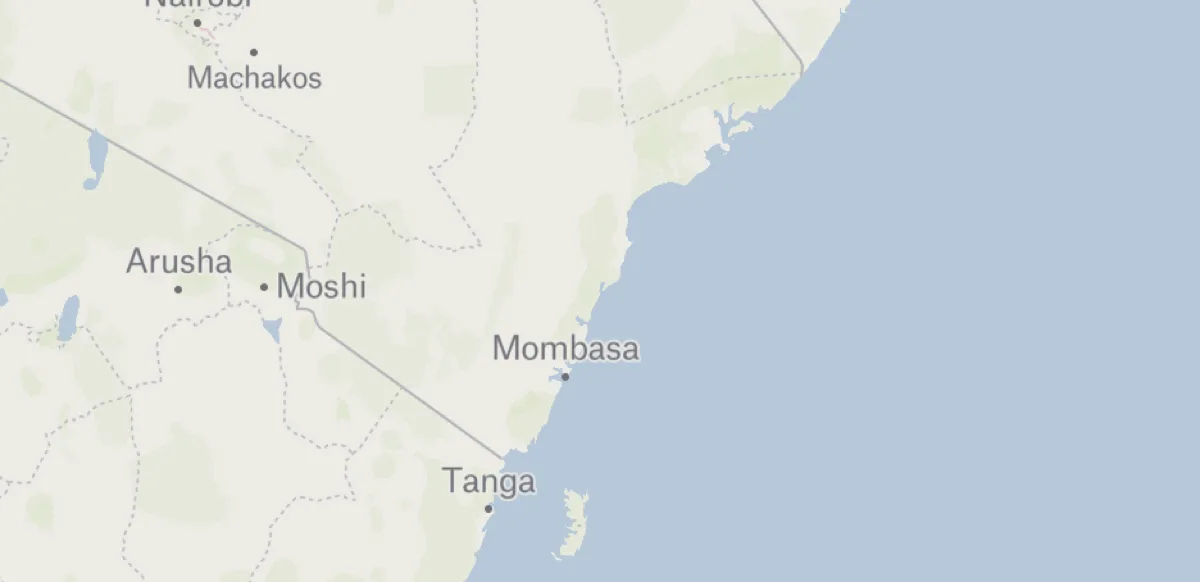
Operator IntelligenceMombasa, Kenya
The Evidence for a Price Increase Was Already in the Reviews
Humphrey had been offering the best tour experience in Mombasa for years before he had the data to prove it. How does review intelligence become a pricing tool — not just a reputation management exercise?
The Problem With Good Products That Aren't Visible
Humphrey had been guiding tours of Old Town Mombasa and Fort Jesus for fifteen years. He knew the history, the hidden corners, and the stories that larger group operators didn't tell. His clients left satisfied. Some of them referred friends. Most of them vanished back into the tourist stream, their experience undocumented and invisible to future travelers doing the same research.
The problem wasn't Humphrey's product. It was that the market had no way to find it. And because there was no systematic mechanism for converting satisfied clients into review evidence, Humphrey's competitive position in online search bore no relationship to his actual quality.
What Review Intelligence Actually Does
The starting point was treating Humphrey's TripAdvisor profile as an intelligence asset rather than an incidental presence.
This means something specific. Reviews aren't just reputation management — they're data about how your product is perceived, what visitors value, how you compare against competitors, and — critically — whether the market's assessment of your quality justifies your current pricing. A tour operator sitting at the top of their destination's TripAdvisor rankings is sitting on evidence that almost no small business ever explicitly uses to evaluate whether they're underpricing their product.
The immediate work was building the mechanisms: a systematic approach to asking satisfied clients to leave reviews, a consistent response practice, and profile content — real photos, genuine testimonials, clear tour descriptions — that would convert profile visitors into bookings at a higher rate.
The ranking change followed from sustained implementation of this, not from a single strategic intervention. The content matched the product reality; the review solicitation was consistent; the responses were prompt and personal. Position improved, visibility increased, and bookings shifted toward advance reservations rather than walk-ups.
The Pricing Decision
When Humphrey's ranking reached the top position in Mombasa and sustained it, the evidence for a pricing reassessment was clear. The market data — not a consultant's recommendation, but actual review volume, ranking position, and booking conversion rates — showed a product that the market was choosing consistently over alternatives at every price point below.
A 50% price increase on a sustained booking volume is only possible when demand is sufficiently inelastic — when the quality evidence is strong enough that a higher price doesn't push buyers to alternatives. The review position was that evidence. It was what made the price increase defensible, to the market and to Humphrey himself.
The shift also changed the booking pattern in ways that improved the product further. Advance bookings meant better-prepared guests, more consistent group sizes, and reduced reliance on catching walk-up tourists at the gate. The digital presence and the operational quality reinforced each other.
What This Demonstrates for Small Operators
The gap between a good product and a product that commands market-leading prices is not usually a quality gap. It's an evidence gap — the absence of systems that make product quality visible and comparable in the channels where travelers make decisions.
For small operators, this is an especially tractable problem. TripAdvisor and Google are free platforms. A one-page website is not an expensive investment. A systematic review-asking practice costs nothing except consistency. The returns — visibility, pricing power, advance booking conversion — are available to any operator with a genuinely good product and the discipline to build the evidence base around it.
The intelligence is already there, in the experiences of every satisfied client who leaves without being asked to document it.
Where Humphrey Is Now
Continued investment in the same system — consistent review solicitation, updated content, responsive profile management — has compounded the original gains. Humphrey Ndungu Tours now holds a 4.9 rating from 450+ TripAdvisor reviews, with tours priced from $50 for the Old Town walking tour to $150 for the half-day city tour, both recommended by over 96% of travelers who've taken them.
The compound dynamic is the point. Review position, pricing power, and booking quality don't peak and hold — they either accumulate or decay. The operators who treat digital presence as something to set up once are the ones who find themselves back at the beginning when a competitor builds the habit they abandoned.
Key Findings & Learnings from Mombasa
Key findings
Review Position Is a Pricing Signal
Moving from deep in Mombasa's tour provider rankings to a top position wasn't just a visibility win — it was evidence of market-leading quality that justified a direct pricing reassessment. The ranking didn't change the product; it made the product's actual value legible to the market. Today Humphrey holds a 4.9 rating across 450+ reviews, with tours priced at $50–$150 per adult — a sustained result of continued investment in the same system.
Authenticity Has Measurable Conversion Value
Photos of Humphrey with actual clients, in real moments from his tours, consistently outperformed polished tourism imagery in converting profile visitors to bookings. Trust-building content isn't just aesthetically different from marketing content — it performs differently.
A Simple, Credible Digital Presence Beats a Complex One
A focused one-page website — two tours clearly explained, real reviews foregrounded, direct booking pathway — produced better results than a more elaborate site would have. The bottleneck wasn't features; it was the clarity of the offer and the credibility of the social proof.
Key learnings
Review Systems Create Value They Don't Automatically Capture
Positive reviews sitting on TripAdvisor without a systematic approach to gathering them, responding to them, and using them in pricing and visibility decisions are a largely untapped asset. The discipline of review management — asking satisfied clients consistently, responding promptly, monitoring competitors — is what converts the value of a good product into measurable competitive position.
Shift to Advance Bookings Changed the Business Model
Moving from walk-up tourists to advance online bookings changed more than the revenue pattern. It changed tour quality: better-prepared guests, scheduled groups, reduced dependence on weather and foot traffic. The digital presence improvement was inseparable from the operational improvement.
Quality Compounds When It's Evidenced
Positive reviews drove visibility; visibility drove more bookings; more bookings produced more reviews. But this cycle requires deliberate management at the start — a period where review solicitation is systematic and response is consistent — before it becomes self-sustaining.