
Destination IntelligenceApril 2026
What tour operators actually say about your destination
The clearest signal of how the trade perceives your destination isn't what operators tell you — it's how they present you on their websites.
Everything the international trade is saying about your destination is public information. It's in the tour listings, the destination pages — or the lack of them — and the way operators have chosen to frame your country to prospective travelers.
Most destinations never look.
The conversations at trade shows are useful. Fam trip debriefs surface real opinions. But in between those moments — when no one is being diplomatic, when operators are just trying to sell holidays — there's something more revealing: their websites, updated whenever they update their product, showing exactly how they've decided to present you.
One caveat worth holding: each operator is packaging your destination for their particular customer base. A specialist wildlife operator and a mass-market beach operator will describe the same country differently, because they're filtering it toward different travelers. That's why reading across a range matters. Five to ten operators in the same source market will give you a composite — where the description converges is close to how the trade as a whole understands you, and where it diverges tells you something about product gaps or positioning inconsistencies.
Does your destination get a page?
The first structural question: does the operator give your country a standalone editorial page — something that introduces the destination before presenting the tours — or do they go straight to a list of products?
Among UK operators who specialise in long-haul travel, destination pages are now fairly standard. Rainbow Tours, Audley, Expert Africa, Responsible Travel — all of them have country-level content that sits above the tour listings. But what's on those pages varies considerably.
Well-established destinations tend to get genuine editorial: Audley separates country guides from tour listings as distinct page types; Responsible Travel's Kenya page reads closer to a magazine article, with extended prose on first-timer suitability, guide culture, and regional variation. For a destination that operators are less confident selling, the page is often thinner — the structural template exists, but it's doing less work.
And for some destinations — particularly those at the edge of an operator's geographic focus — there's no country page at all. The tours exist in a list. There's no surrounding context, no "why go," no sense of who the traveler is. That tells you something specific: the operator considers your destination a product, not a story worth telling.
What the tour listing reveals
Tour titles are a direct record of how the trade has decided to frame your destination.
The dominant convention among UK operators is geography plus activity: "Big Cat Masai Mara & Samburu Safari," "Kenya and the Seychelles — Wildlife Bonanza and Beach," "Reefs & Rainforests of Costa Rica & Panama." These titles are functional and searchable. They signal to someone already interested. They don't do much work for someone who's weighing options.
Compare that to Expert Africa's approach, where tour "titles" function as itinerary précis — full sentences describing the logic of the trip. Or to how some operators flag a destination's distinctiveness in the opening line of a country page: Rainbow Tours on Guyana leads with "87% virgin rainforest and receives only about 3,000 tourists a year — so when you are on your Guyana holiday, you know that you are visiting a place that is rarely seen by others." That's a positioning argument built around scarcity and authenticity, and it tells a very different traveler that this destination is for them.
What framing argument is your destination getting? And is it the argument that matches what you're actually trying to offer?
Where the description opens
Look at how individual tours are described — specifically, what the first sentence is doing.
On product listing pages for competitive destinations, operators tend to open with experience: what kind of traveler this is for, what the trip actually feels like, what distinguishes it. Logistics — duration, accommodation tier, inclusions — come later or are handled through a spec sheet.
For destinations where the operator has less confidence, or fewer tours competing for attention, the pattern sometimes inverts: duration and price per person appear before any narrative. That shift isn't deliberate editorial policy. It's a signal that the operator hasn't found the story yet — or wasn't given one to work with.
Alignment with your goals
A less obvious but equally important signal: which traveler is the operator presenting your destination to?
Look at the imagery, the length and style of trips, the price point, the experience mix. Does that traveler profile match the visitor you're trying to attract? Does it reflect the sustainability commitments or community benefit goals your destination has made?
Operators make these choices based on what sells to their customer base — but also based on what they've been given to work with. A destination that has invested in articulating a clear traveler profile, with supporting narrative and visual assets, tends to be packaged more coherently than one that has left operators to interpret the product themselves.
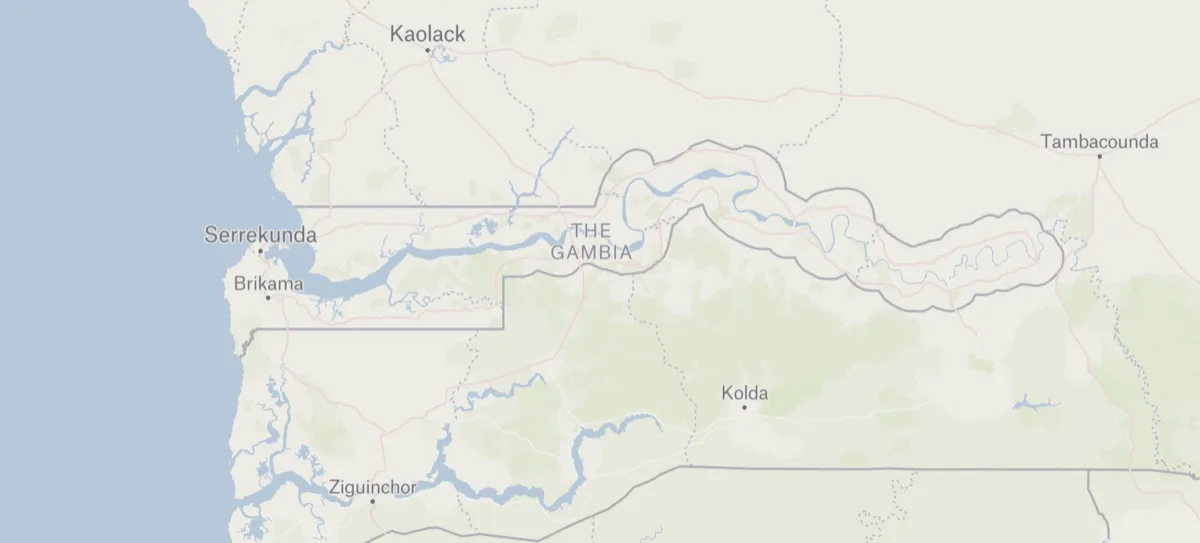
Rainbow Tours frames Sierra Leone's positioning explicitly against its neighbor: "The troubles of the 1990s prevented the development of the mass tourism that dominates nearby Gambia." That framing — using recent history to explain why the product is different — only appears in the editorial because someone understood it was the argument to make. Most destinations leave that work to the operator, and the operator either does it imperfectly or doesn't do it at all.
What's missing is often more telling
Read across your sample and note what doesn't appear.
Are certain regions of your country absent from the product mix? Are particular experience types — cultural immersion, off-season travel, multi-destination itineraries — completely missing? Is your destination listed as an add-on to a more prominent neighbor rather than as a primary destination in its own right?
These absences don't mean the product doesn't exist. They usually mean the trade doesn't know how to package it, or hasn't been given reason to try.
That gap — between what a destination offers and what the trade can articulate about it — is one of the more reliable indicators of where promotional effort will actually move the needle.
What to do with what you find
The operator landscape isn't something you read once. The packaging changes as products are updated, as new operators enter a market, as a destination invests in trade relationships or withdraws from them.
But a structured read of how your destination is currently presented — across a defined set of operators in your priority source markets — gives you a baseline. You can see where language is consistent with your positioning and where it's drifted. You can identify which operators have invested in building your destination's story and which are treating you as a line item.
That baseline makes the next trade conversation easier. Instead of asking "what do you think of us?", you can say "we noticed you present our destination this way — here's what we'd like to help you say instead."
Working through something similar?
Tell us what you're trying to understand.